




Consulting Corner: Navigating Uncertainty, Finding Global Opportunity
By Michael Muñoz | Senior VP, Design Services
During three full days in London, my colleague Ryan Andrews and I met with 11 existing and prospective clients. The conversations were open, practical, and remarkably consistent. Clients see real demand in the market, but they are also weighing construction costs, interest rates, political conditions, and the economics of moving projects forward.
One point stood out: London has a stated shortage of commercial office space. The need is there, yet many planned projects are waiting for the moment when the numbers make sense. That creates an interesting tension. Demand is not disappearing; it is accumulating.
The real question is when the market will move — and whether project teams will be ready when it does.
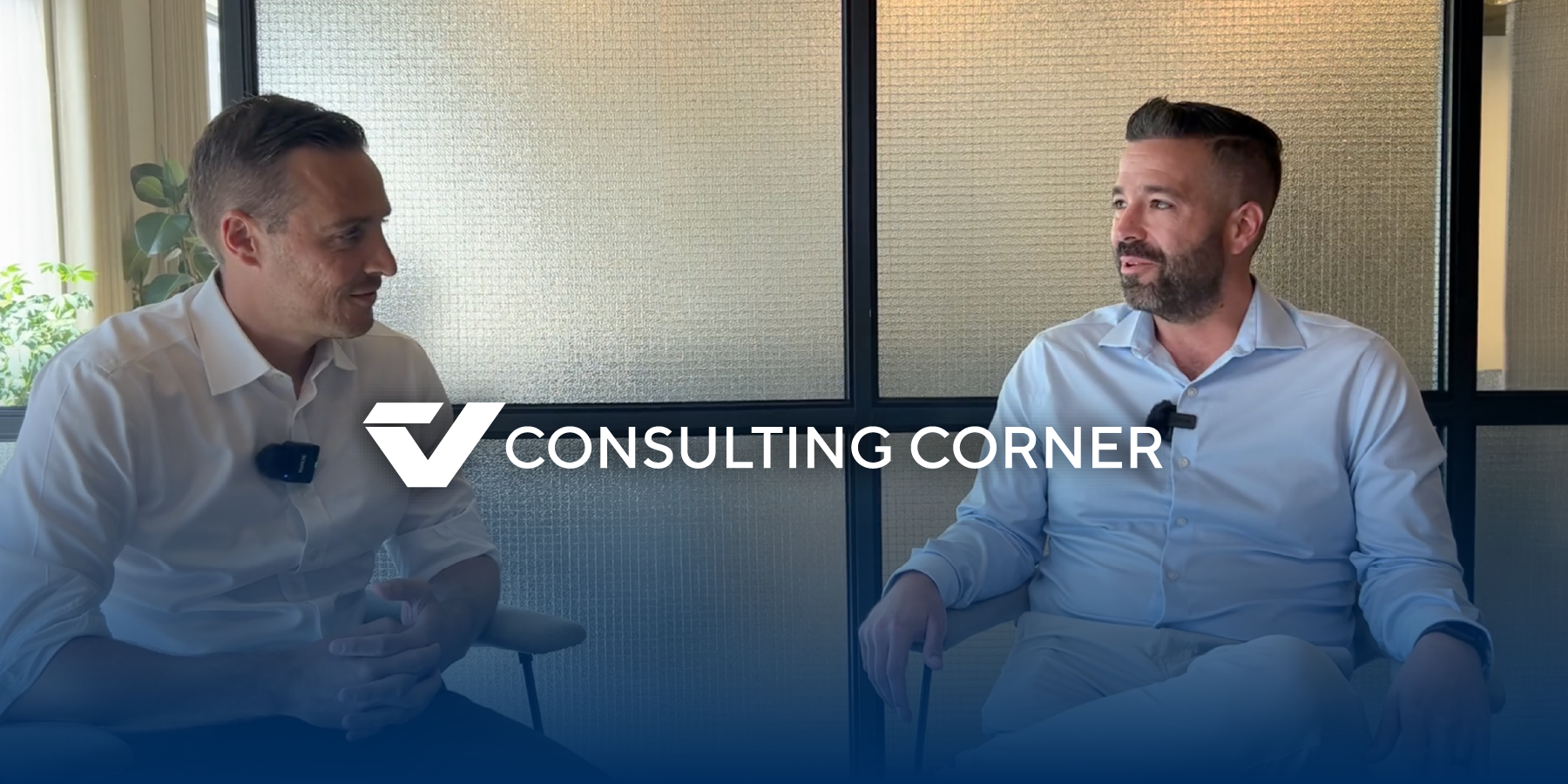
Watch the Consulting Corner interview with author Michael Muñoz and Ryan Andrews, Associate Director at D2E in London, as they discuss the market insights and global opportunities explored in this blog.
Turn Uncertainty into Project Decisions
We cannot control interest rates, political shifts, or the price of every material. What we can do is translate those pressures into better decisions at the project level.
For vertical transportation design, my first question is not where we can cut. It is what the building and its users must be able to rely on. Capacity, safety, reliability, accessibility, performance, and user experience should be established as non-negotiables. Once those outcomes are clear, the project team can identify where flexibility exists in the equipment configuration, finishes, controls, phasing, or other parts of the scope.
This is especially important when a lift package was budgeted months — or even a year — before procurement. Current pricing may be meaningfully higher than the original allowance. A timely market check allows the team to close that gap while protecting the quality and long-term performance of the system. The goal is not simply to spend less. It is to make informed tradeoffs before late redesigns, procurement delays, or false savings limit the available options.
Use Current Intelligence, Not Old Assumptions
Supplier performance was another recurring concern. It is a global challenge, but it is rarely as simple as one contractor being consistently strong and another consistently weak. Performance varies by geography, local team, workload, and project type. A supplier’s reputation is often only as current as its most recent success, or its most recent letdown.
That’s why owners and design teams need recent, locally relevant information. If a project is experiencing delays or unreliable equipment, the first step is to identify the root cause. Is the problem of staffing, parts, communication, service capacity, or the equipment itself? The right response may be to correct the current relationship, adjust the plan, or change contractors.
There is no one-size-fits-all answer. The value of an independent elevator consultant is the commitment to understand the specific problem, follow it through, and build a solution around the client’s needs.
Broaden the Horizon
Our conversations in London also offered a broader lesson. While activity in the UK remains cautious, many firms are not standing still. They are pursuing work in places such as UAE, Singapore, and other markets across the Middle East and Southeast Asia.
That ability to pivot matters. When one market slows, firms should consider where their expertise can create value elsewhere. However, broadening your horizon does not mean entering unfamiliar markets alone. Regional codes, procurement practices, supplier capabilities, and lifecycle support all require careful planning. The right trusted partner can connect a strong local relationship with specialists who understand the geography, building type, and technical demands of the opportunity.
That’s where the combined reach of VDA and D2E becomes especially valuable. We can assemble the best team for a project rather than limiting the team to one office or one region. A consultant in London may bring relevant experience to a Middle East opportunity, while a specialist in New York or another market adds complementary expertise. With teams working across time zones, clients can also receive faster, more coordinated support without losing the local relationships they already trust.
What Next? Prepare for When the Market Rebounds
London’s office space shortage will not resolve itself. At some point, projects now waiting for a green light will begin moving. When one major development proceeds, others may follow quickly, creating greater competition for supplier capacity and experienced project teams.
The best time to clarify priorities, test budgets, understand current supplier conditions, and build the right advisory team is before that acceleration begins. The same is true for firms considering work beyond their home market: start building relationships and regional understanding before an opportunity is at the door.
Certainty does not come from predicting exactly when the market will turn. It comes from preparing to act when it does — with clear priorities, current intelligence, flexible strategies, and a trusted partner ready to help navigate what comes next.
About the Author
Michael Muñoz joined VDA in 2006. As SVP of Design Services, he leads a team of engineers and vertical transportation professionals who support new construction and existing building projects across the U.S. and internationally. From early traffic analysis and system recommendations to construction drawings, specifications, RFIs, and shop drawing reviews, his team helps ensure elevator and escalator systems are thoughtfully designed, carefully coordinated, and aligned with each client’s goals. Follow him on LinkedIn.